In active development · Match Engine V1

Classic manager soul.
Modern football simulation.

A mobile-first football management game inspired by the clarity and speed of classic 90s managers — rebuilt for 2026 with a deterministic, spatial Match Engine underneath.
Product thesis · Easy to play. Hard to master.Platform · Mobile-firstCore · Single-player / offline-first
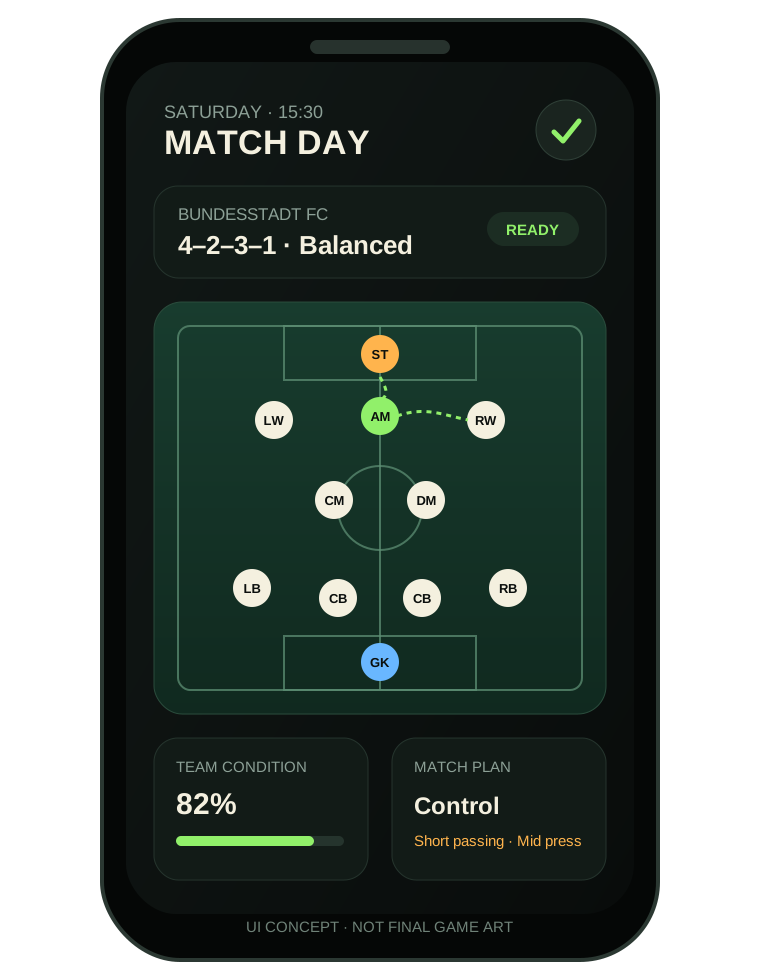
Concept mobile match-day interface
Product visionComplexity in the simulation — not in the interface.
“The football manager we miss — without giving up modern depth.”Not a remake. Not a clone. A new mobile football manager built around speed, clarity, long careers and a simulation that earns the result.
01 · Product vision

Football management became deeper. It also became harder to simply enjoy.

Our goal is to combine the immediacy of classic football managers with the underlying logic of a modern simulation. The player should make a few clear decisions. The engine should do the hard work underneath.

01 / SIMPLE TO PLAY

Clarity before menus

Squad, roles, tactics and club decisions should be understandable in seconds — especially on a phone.

02 / DEEP UNDERNEATH

Simulation earns the outcome

Player movement, space, pass trajectories, first touch, pressure and contests are simulated instead of faked with a final score generator.

03 / LONG-TERM HOOK

Build a club, not a spreadsheet

Fast match-to-match flow on mobile, but seasons, careers and club development that can keep the player invested for months.
02 · The loop

A few minutes to make decisions. Years to build a dynasty.

01Build club
→
02Build team
→
03Prepare match
→
04Play & watch
Match → Week → Season → Career → Club legacy
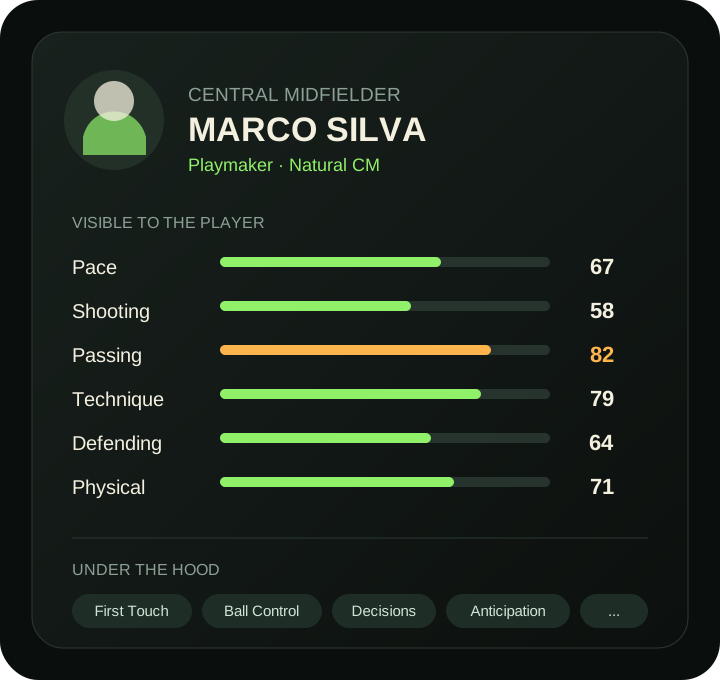
Player system concept card
03 · Player system

Six attributes the player understands. A richer footballer underneath.

Field players expose six readable attributes: Pace, Shooting, Passing, Technique, Defending and Physical. The Match Engine resolves actions from underlying abilities and context — not from a magical OVR number.

14 locked positionsPosition and role are separate. Familiarity describes where a player can operate.
Role behaviour, not stat buffsA Playmaker behaves differently because of movement and decision tendencies, not a hidden +10 passing bonus.
Abilities matter in live simulationFirst Touch, Ball Control, Tackling and Anticipation already change measurable outcomes.
04 · Roles, not magic

Tell the player how to play. Let his ability decide whether he can.

CM
CM · PLAYMAKER

Behaviour is the instruction.

Roles influence depth, width, roaming, support distance, passing risk, pressing and other behavioural tendencies. They do not turn an average footballer into an elite one.

A role answers: “What should this player try to do?”
Abilities and match context answer: “Can he actually do it?”
05 · Match Engine

We simulate football — not just the score.

The same headless engine drives every future presentation mode. Match time is real simulation time; the UI may compress or skip waiting without changing the outcome.
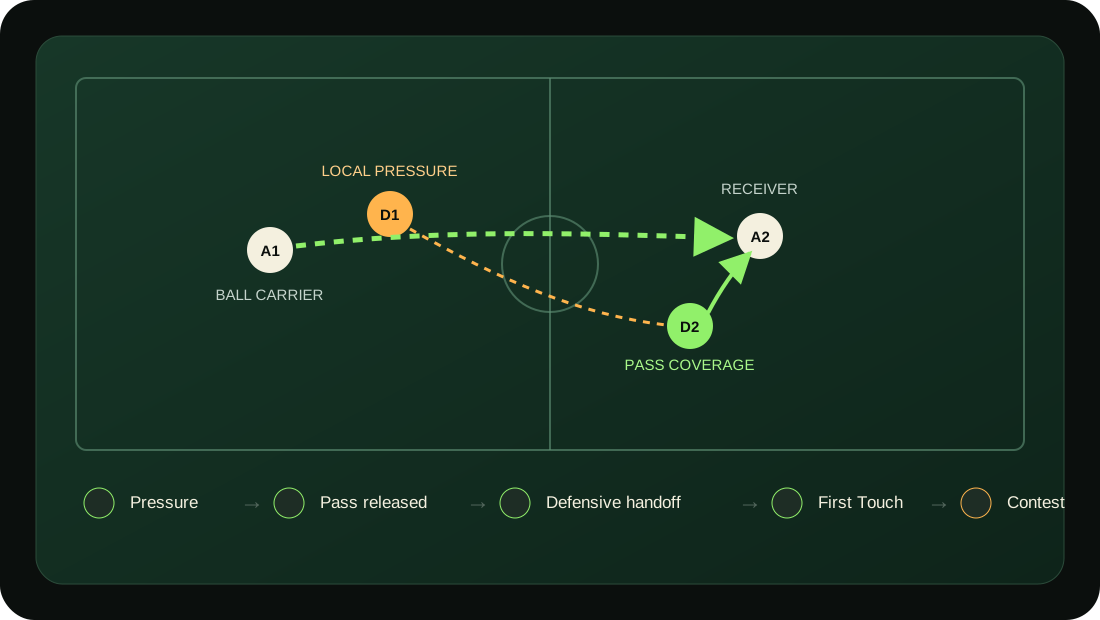
Match Engine causal flow visualization
105 × 68 mCanonical physical pitch geometry.
Real football timeActions, stoppages and restarts consume simulation time.
Semantic RNGDeterministic, replayable gameplay randomness.
BallControlExplicit control authority separate from possession sequence.
Pass trajectoriesPhysical terminals, reception and interception semantics.
Defensive coverageCollective block + local carrier and pass-flight pressure.
First TouchAbility-sensitive reception with moderate-skill differentiation.
Possession contestDirect Tackling vs BallControl challenge at genuine close range.
06 · Player differentiation

Better players actually behave better.

We built a deterministic heterogeneous ability probe specifically to verify that the Match Engine reacts to player quality. These are development validation figures, not final league calibration targets.
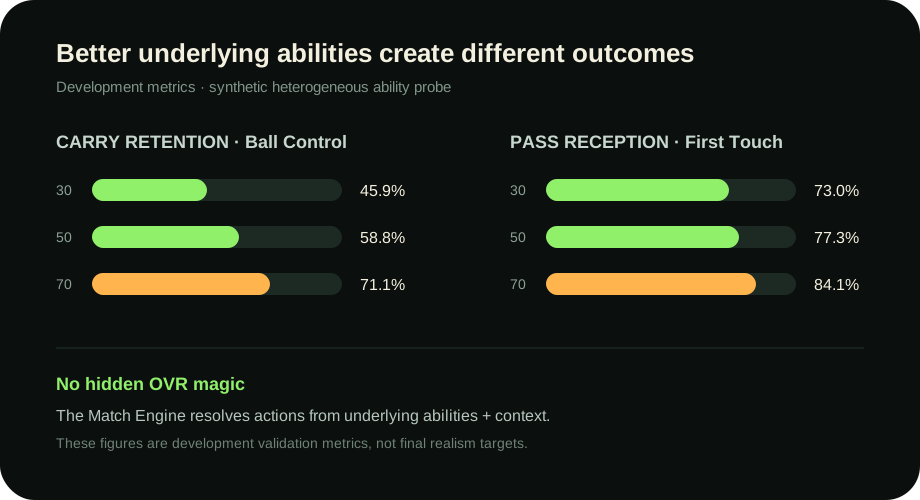
Ball ControlCarry retention rises strongly across 30 → 50 → 70 ability.
First TouchReception is ordered and no longer saturates at moderate ability values.
Tackling vs Ball ControlOpposed-skill contests are monotonic and deterministic under replay.
Ability differentiation charts
07 · Where we are today

Past the “idea” phase. Still early enough to shape the product.

The project already has a working deterministic headless Match Engine foundation and a growing automated test suite. The UI shown here is product concept art; the simulation underneath is the part currently receiving the most engineering effort.

✓
Player attribute architectureVisible + hidden ability model, positions, familiarity and roles.
implemented / locked
✓
Formation & role behaviourData-driven anchors and behavioural role tendencies.
implemented
✓
Physical Match Engine geometry105×68 pitch, physical distance authority and event/state architecture.
implemented
✓
Pass / reception / interceptionPhysical pass terminal, First Touch, responder logic and reception outcome.
implemented
✓
Defensive pressure stackCollective block, local engagement and pass-flight defensive handoff.
implemented
✓
Controlled-ball possession contestClose-range direct win using Tackling vs BallControl.
implemented
✓
Heterogeneous ability validationDifferent player abilities deterministically change match history.
validated
●
Loose-ball recovery lifecycleCurrent focus: physically coherent recovery timing and failed-touch consequences.
in development
→
Off-ball support / long possession structureOne of the major remaining Match Engine structural gaps.
planned
→
Club, career & production UIProgressive product layer after the engine foundation reaches a stable playable slice.
planned
08 · Architecture

A simulation core designed to survive presentation changes.

ENGINE

TypeScript · headless first

Core match logic can run without the mobile UI, making calibration, testing and fast simulation possible.

STATE

Authoritative transitions

MatchState owns reality. Events, control, possession and scheduler changes commit atomically through transition contracts.

RNG

Deterministic semantic draws

The same seed and setup produce replay-identical semantic gameplay — critical for debugging and future simulation modes.

PRESENTATION

Simulation ≠ UI speed

The engine can simulate football time faithfully while the mobile presentation compresses waiting, skips animations or fast-forwards.

09 · Realism philosophy

Calibrate distributions. Never fake realism with one headline average.

European Top 5 leagues are the primary realism benchmark, with Bundesliga used as an additional control. Shots, goals, passes, interceptions, restarts and possession structures are calibration targets only where provider semantics actually match ours.

REFERENCE

Real football data

Use published/open sources and semantics-aware benchmarks where licensing permits.

METHOD

Observer-driven calibration

Measure the engine on repeatable 90-minute batches, compare distributions, change one subsystem at a time.

GUARDRAIL

No stat chasing

A mechanic is accepted because its football semantics work — not because it happens to move goals toward a preferred number.

10 · Roadmap

From simulation foundation to a playable mobile career.

✓

Foundation

Player model, positions, roles, state architecture.

●

Match Engine V1

Current focus: loose balls, physical recovery and remaining structure.

3

Club & Career

Squad lifecycle, finances, transfer loops, youth, development.

4

Playable Mobile Alpha

Production UI + end-to-end season slice.

5

Closed Test → Release

QA, calibration, content, store readiness and launch.

11 · Why this can become a business

A product built for football obsession — without needing pay-to-win design.

The commercial thesis is retention through club ownership, seasons and identity — not the sale of competitive advantage. Exact monetisation is deliberately not locked before the core game proves itself.

📱

Mobile-first reach

Short sessions, fast match preparation and long careers fit mobile behaviour naturally.

♻️

Long retention loop

Every match changes a week; every week changes a season; every season changes the club story.

🧩

Expandable systems

Leagues, club content, deeper tactics and career features can grow on top of one simulation core.

🛡️

Integrity first

Monetisation can focus on cosmetic, convenience and content options instead of selling match power.

⚙️

Simulation IP

The Match Engine, deterministic testing and behavioural architecture are reusable technical assets.

🚀

Capital accelerates

UI/UX, art, engineering, QA, legal/data review, device coverage, launch and acquisition.

12 · Risks & open questions

A credible plan includes what is not solved yet.

Match Engine still evolving

Loose-ball recovery and off-ball support structure remain active engineering areas.

Final realism is not calibrated

Current metrics validate mechanics and sensitivity; release-level football distributions come later.

Production UI is concept-stage

The mobile screens on this page communicate product direction, not finished game art.

Licensing / data scope

Real club/player licensing and any commercial data-provider usage require separate product/legal decisions.

Career systems remain to build

Transfers, finances, development, youth, contracts and long-term club progression are not yet a complete playable product.

Monetisation is intentionally open

The product should prove its core loop before monetisation is allowed to distort it.

Easy to enter. Hard to master. Built to last for seasons.

We are building the football manager we would want to keep on our phone for years — with classic clarity on the surface and a modern simulation underneath.

Open Product & Technical Concept ↗